Sit Down Gardening ! Ergonomic Nutrition?
Concrete Basins of the 1980s online pics-2008
Suggestion: Adjust your display-window to see all pictures full size.
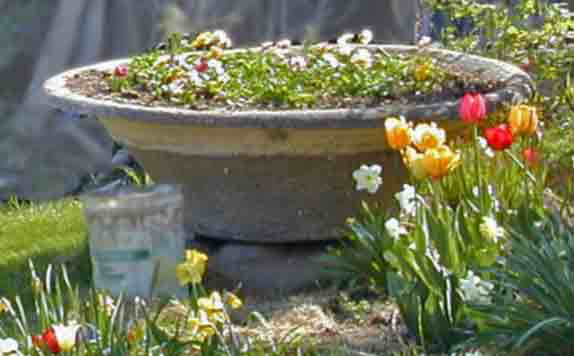
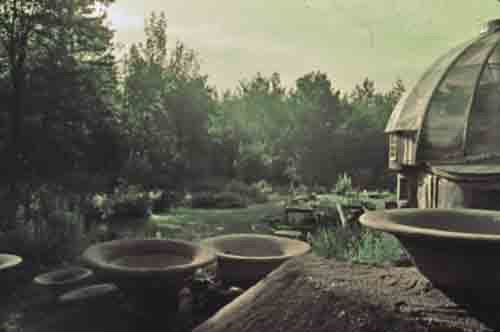
Seat- planters offer ergonomic productivity and balanced-access instead of back-bending tension. Long hours of bending over while gardening is ameliorated by sitting planters. Bending over to touch the ground may at times be a useful exercise. Gardening can offer balanced physical exercise all day, even on long work days.
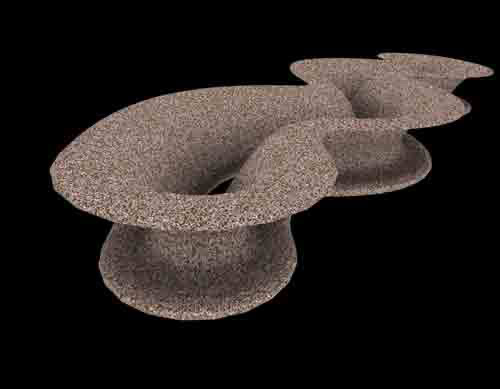
Think of greater possibilities. Imagine a farmers produce garden, based on sitting-planters. Advanced, sustainable methods of organic gardening can be implemented, easily. Laborers, gardeners, and farmers can all increase productivity, ergonomically. Inspiring work environments can grow from these ideas. I am just one man, one mind trying to promote these general ideas. Please consider the concept in terms of, "do it yourself" sustainability.
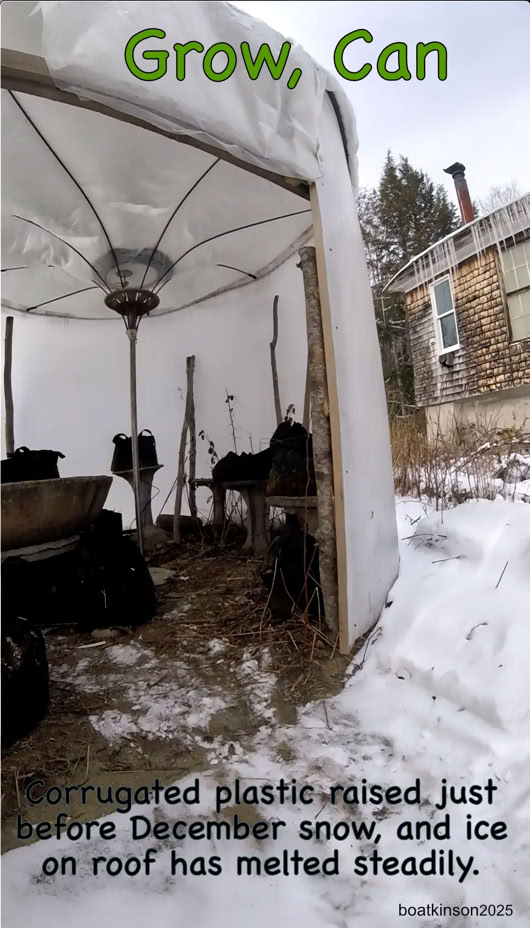
Next page link shows cylindrical,, corrugated plastic wall with inverted-umbrella roof, and planters inside, click pic for details.
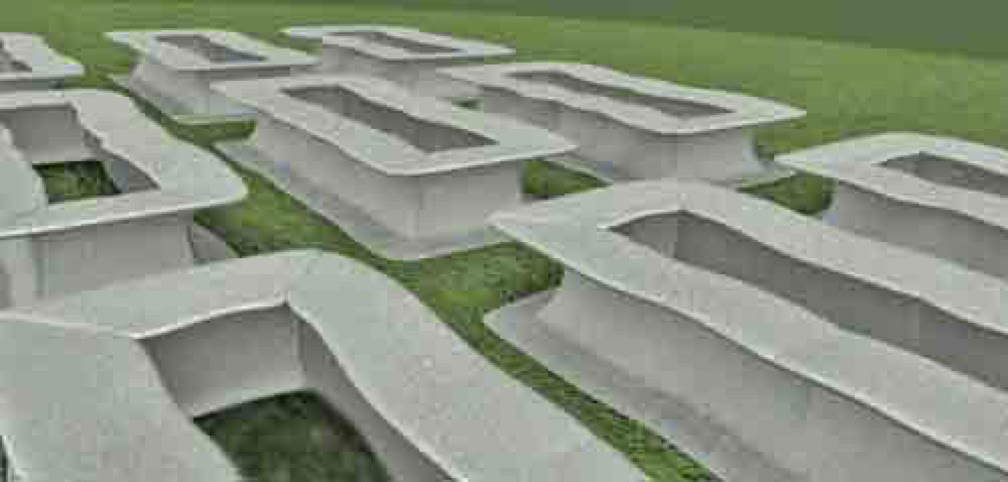
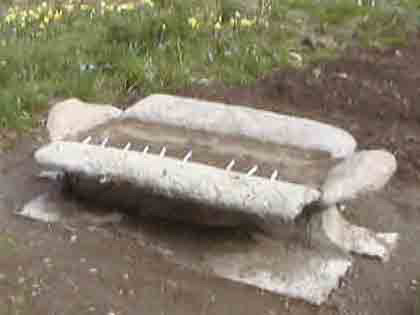
The great advantages of "raised bed gardening" might be innovated upon and cast in stone. I first learned of this during the 1970's, especially in reading about biodynamics. Over the years a variety of techniques were tried and experimented with. Improved drainage and water conservation are both possible in container gardening. In excessively wet soil, drainage is assured. In very dry climates, vertical water drainage can be stopped. Mulch requirements are decreased. Above-surface-tiles can be tried, as mulch components or devices. My feeling is that large scale weed management or small scale management are both possible. Tiles in gardening have at one point or another, enticed ants (essential for peonies at least).
Large arrays of planters can contain larger gardens. Almost any planter extent, contour and layout is possible. (Planters were "rendered empty of soil")
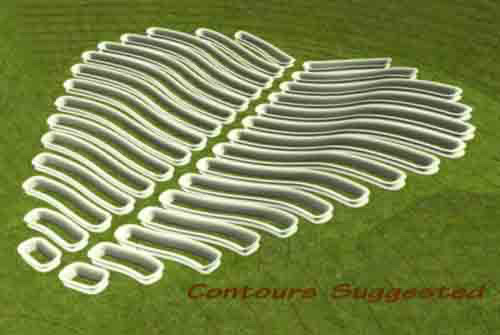
A large scale sitting planter garden is visualized above, embedded in a hollow swale contour. Almost any contour can be utilized with planter customization. I also offer a variety of planters to fit green house needs. Ferrocement conserves material and budgets. Simple ferrocement has been proven durable in sea worthy boats, for long periods. The seat also serves as a clean "shelf" for plants and "fruits of the vine". The "foot" provides convenient "mowing borders", so that the additional edge trimming is not required.
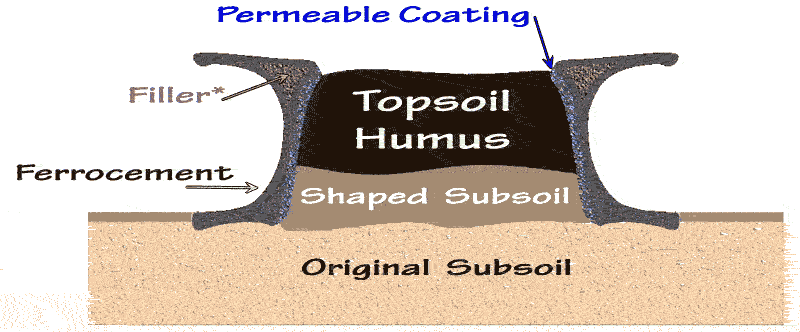
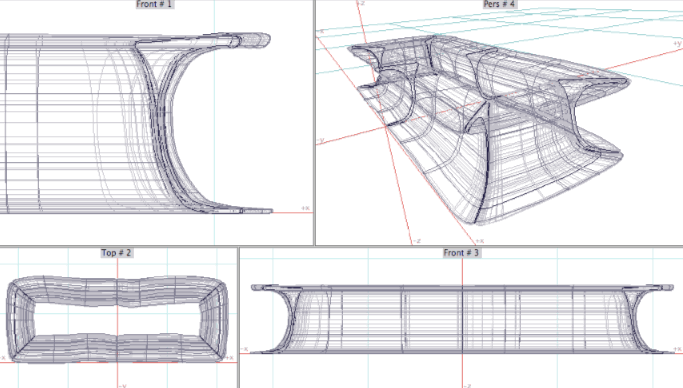
The general profile is schematically diagramed above. Relatively thin ferrocement can be cast in the garden soil or nearby. (Alternatively, ambitious investors could start manufacturing such items with innovative facilities). The permeable concrete coating is very easy to make, simply by excluding sand from a concrete mix, which then forms many interconnected voids , suitable for gradual water distribution and for valuable root aeration. Each time the atmospheric pressure alternates, air will penetrate this permeable concrete coating. Microscopic air currents will enter and exit this porosity. As a result, air is breathed downward and contacts soil. This porosity helps nature's important soil breathing technique. In case of draught extremes, water-conservation-measures like porosity or permeability reduction and added linings can be considered. Cool-wet climates and clay based soil benefit more from this permeability feature. Arid weather, with automatic irrigation already provides this "soil-breathing".
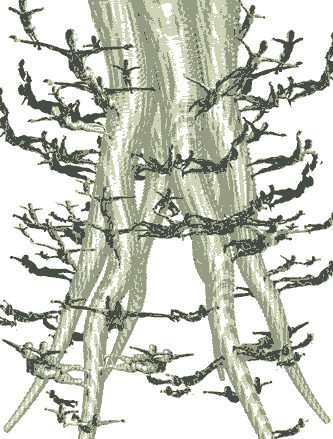
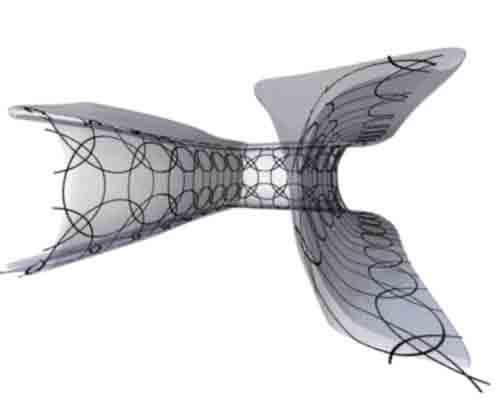
The horizontally arched planter sides can be reinforced with steel rings, (made visible in the transparent rendering above). Ringed ferrocement is "easy". Do it oneself, or hire local labor-contractors from the service-economy of today.
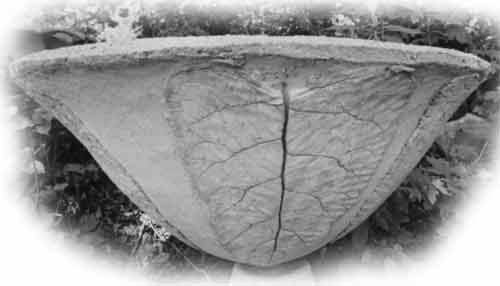
Ferrocement materials offer the most advantage for large projects using thin wall construction. Individual, flower pots really don't need steel reinforcement.
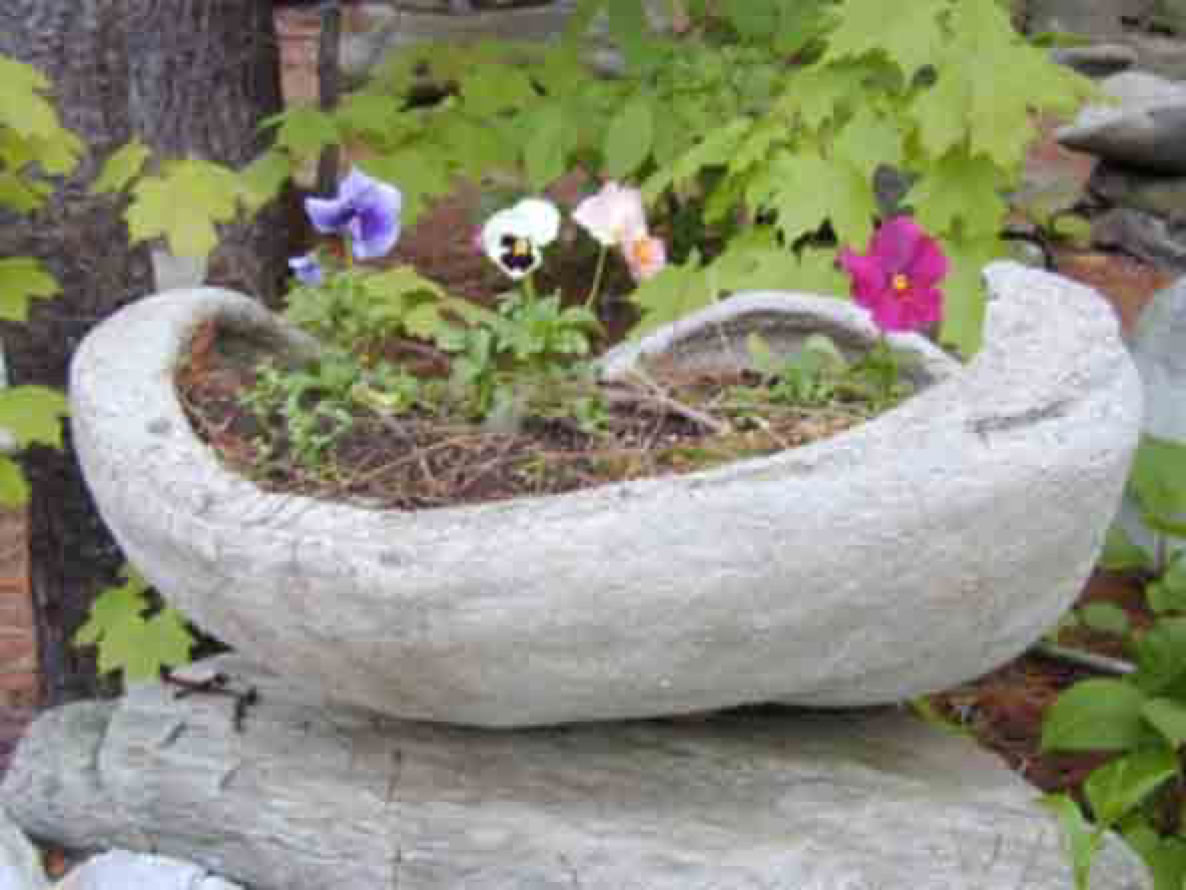
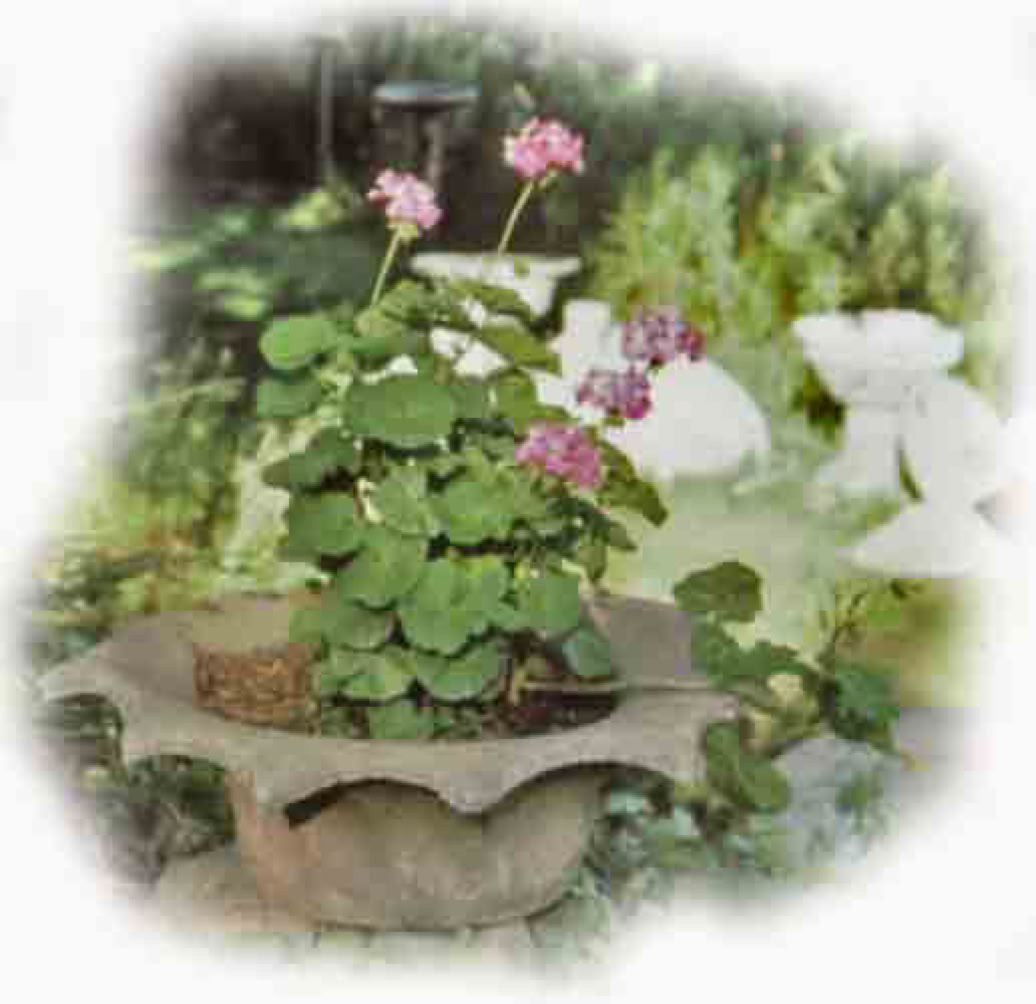
The three flower pots above were sand cast, which means sculpted in the sand as a mold. I have described this easily learned process here. My rule of thumb was to use ring reinforcement in pots larger than than a yard or a meter in diameter. Smaller sized works have not needed any reinforcement.
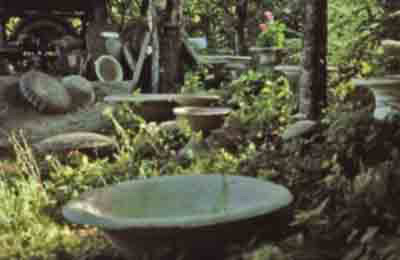
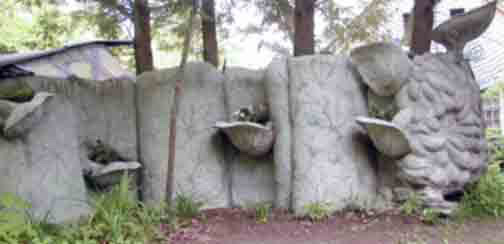
Almost any size overall or thickness can be custom built. Very thin sections benefit from reinforcement, thicker sections can be called concrete. Many method variations are possible. The simplest methods are easy to start up.
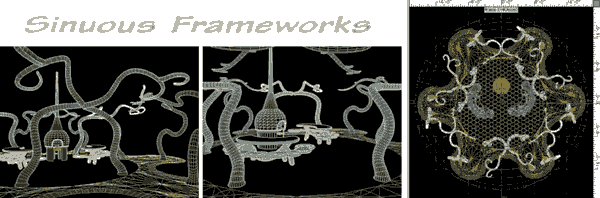
Greater skill is required for more imaginative applications. Yet so much is possible, even for beginners to try sculpting. Following are bird perches.

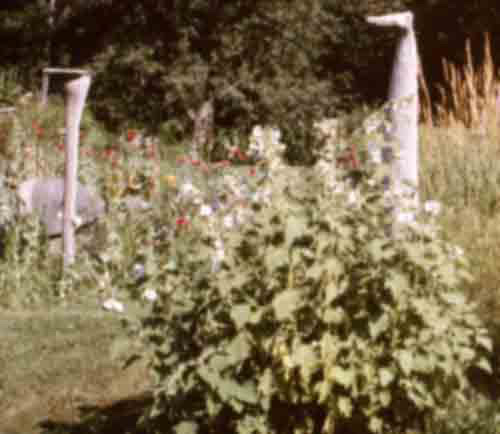
Bird perches are very important for "organic" pest-patrol! These are simple to imagine and then to visualize as you pour shapes in a sand mold. Perhaps one person will make it easily adapt as a scare crow. Another person might like to" add on to it", masks for a totem or other form of personalized sculpture.
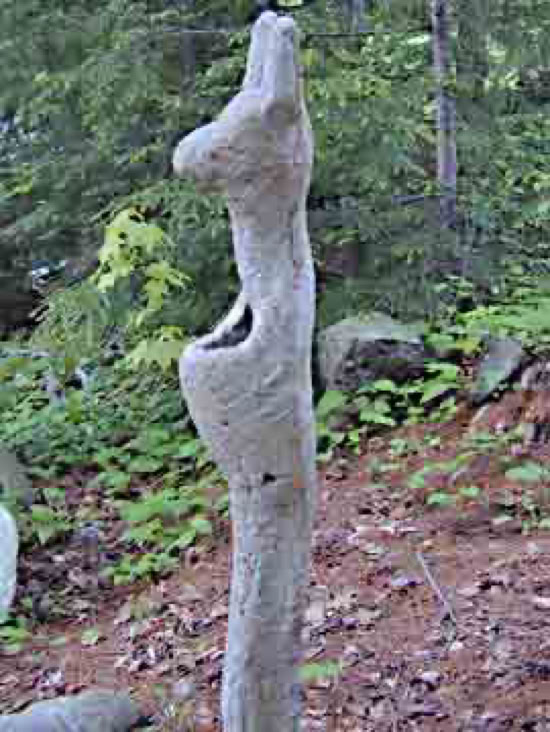
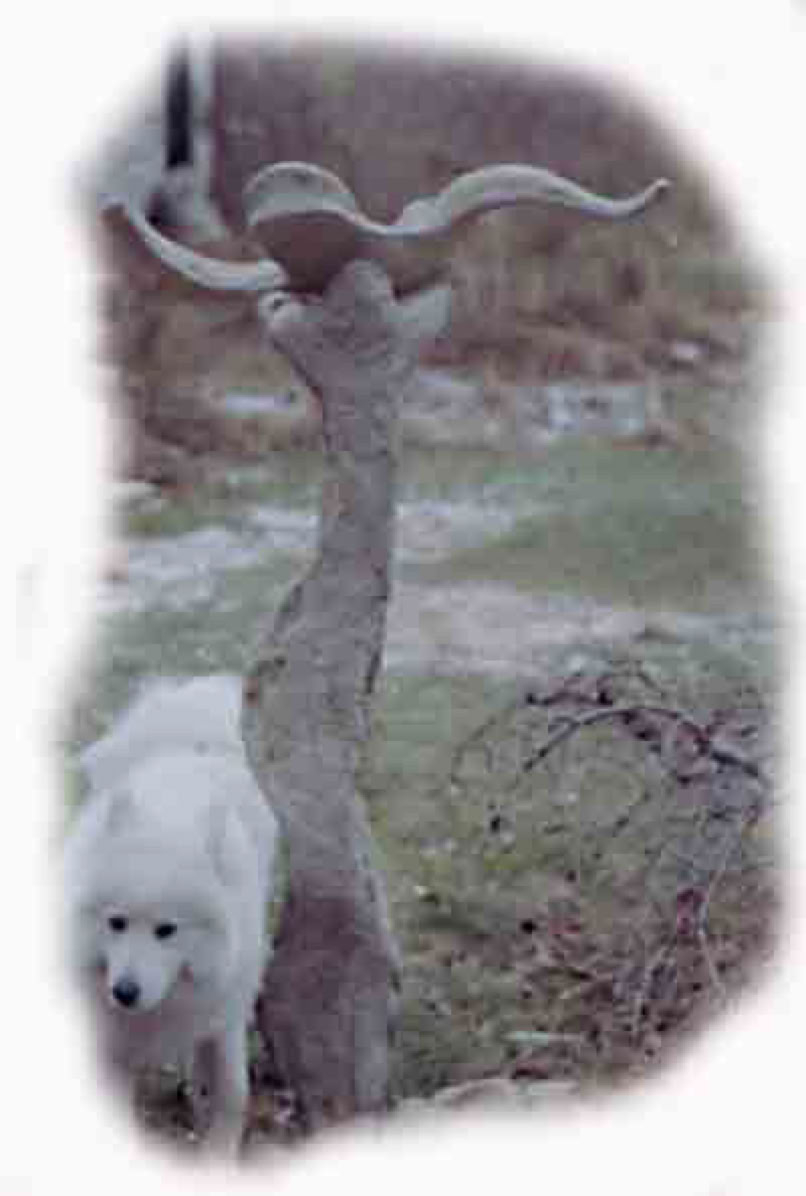
Bird perches also can be actual planters, ("Ru" above with a plant pouch). Bird baths can be birds! (Bird sculpture above). Nothing is easier to start sculpting than...
A bird bath! A stick or wooden pole can serve as a cat-proof stand. Just add three nails on top for balancing the bird bath. Bees and pollinators love a handy drink! Please consider the vital pollinators, so long ignored. These creatures tirelessly keep our world green, but are threatened today by self-blinding over-industrialization. I'm a big believer in harmonious industrial progress, proved by serving all life, (as much as is gradually and sequentially possible).
In addition to perches and bird baths, there might be great value in sculptural trellises for vegetables. Visualizations and photos will be added, visit again.
Stack-able mushroom-like modules are so easy to sand cast. Can we imagine training tomatoes or any vine over props like these? I do try to work towards sculptural trellises. I useually find myself caught up with other priorities.
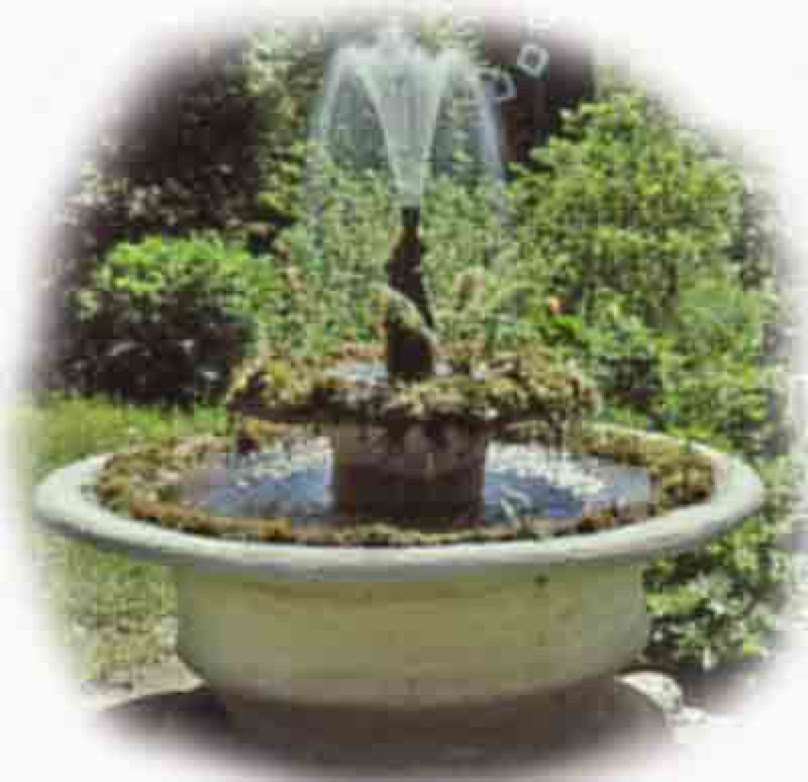
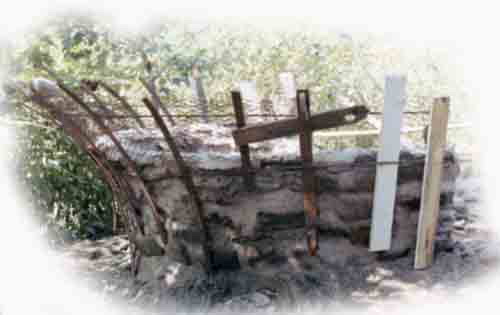
Mason-ed basins make sense too. Above is pictured my approach to building form work, for an overhanging flare of stones with steel integral reinforcement. The visible steel is form work only, leaves from old car car springs, (and a couple of scrap boards).
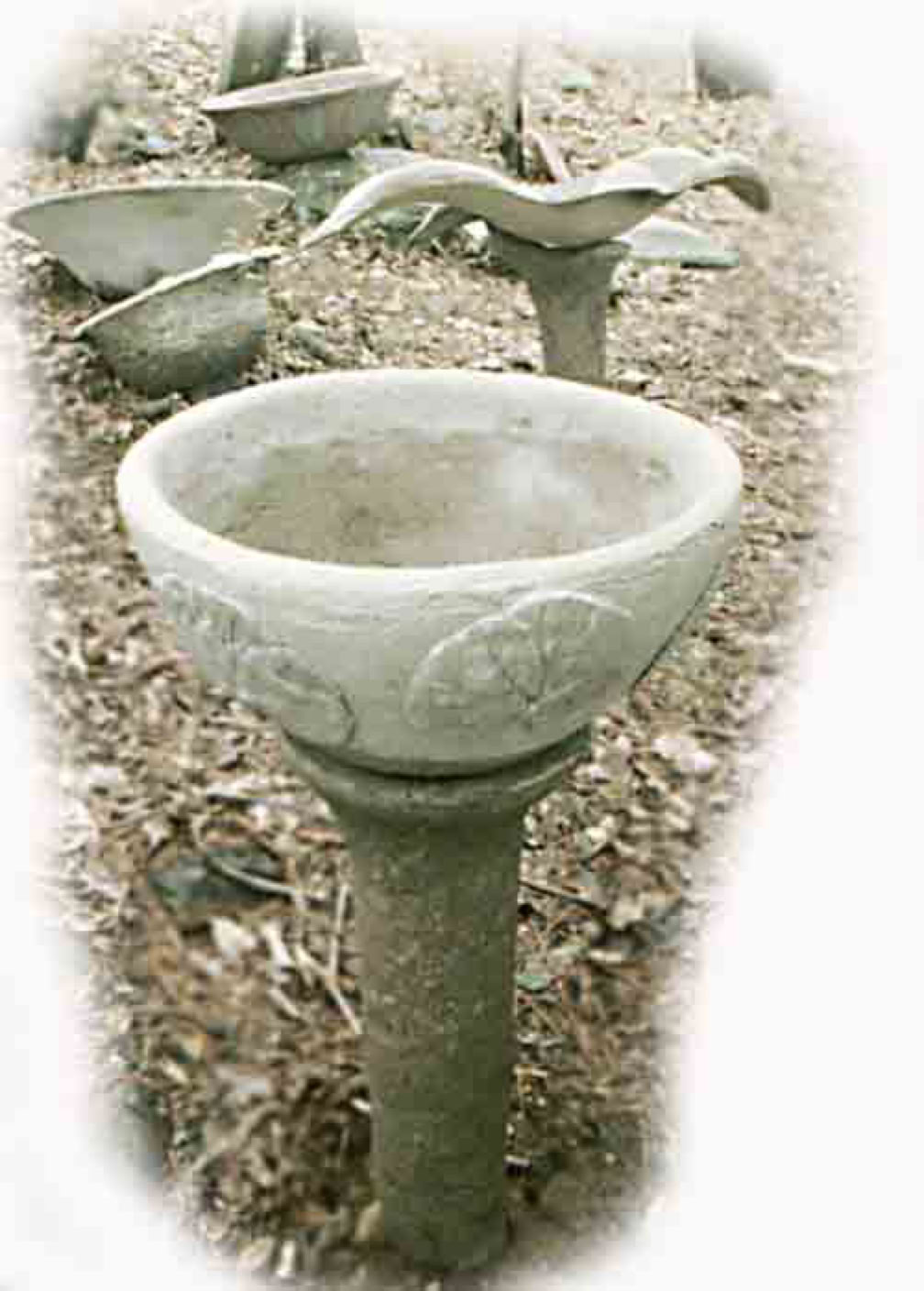
My major intent in this webpage, is to suggest and promote the idea that more people might enjoy gardening. If a few cementitious amenities were made more widely available. Namely planter systems which could automate the tedium (including automated watering).
Flaring flower pots and flaring stands along with "fluted" surfaces or leaf embossing are all possible. Read my sand casting page for more details.

Northern summers are a very busy time for me. I hope to eventually collect and annotate pictures of and concepts for my first dedicated effort, to build and install some productive "sitting planters".
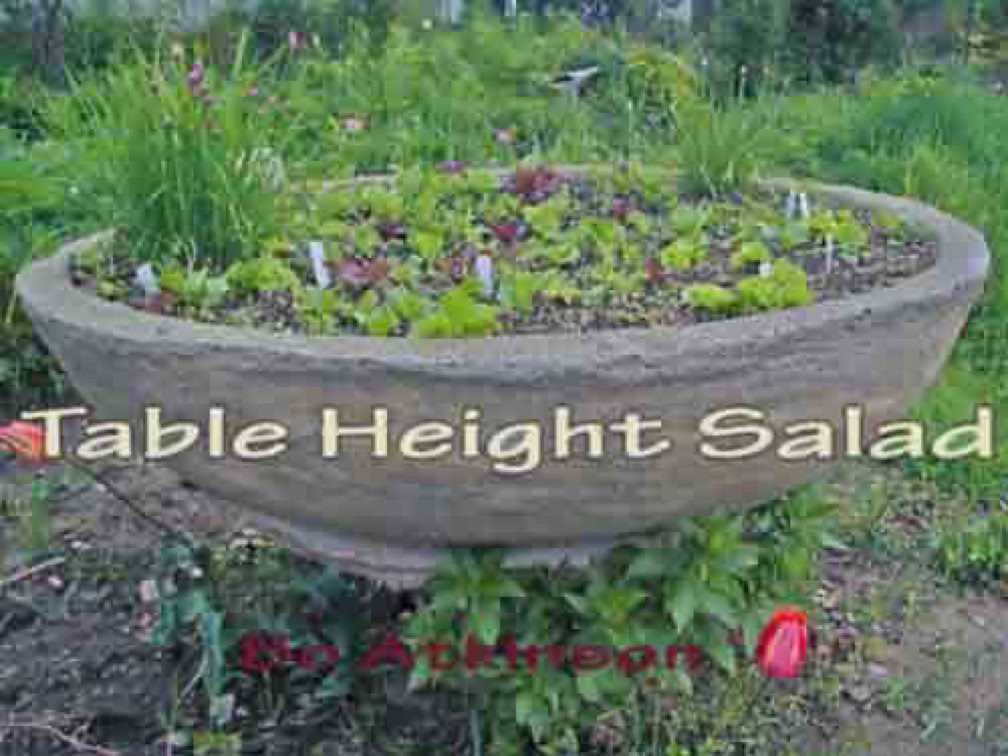
Finally, people from other walks of life could harmonize their diverse lifestyles with some degree of plant growing. Good gardeners may benefit to know that relatively few people in industrialized societies discover highly agreeable modes of gardening. "Sitting planter systems" might be what industrialized people need before they can "get back to nature". Garden in their own discoverable and particular style, your style, not mine.
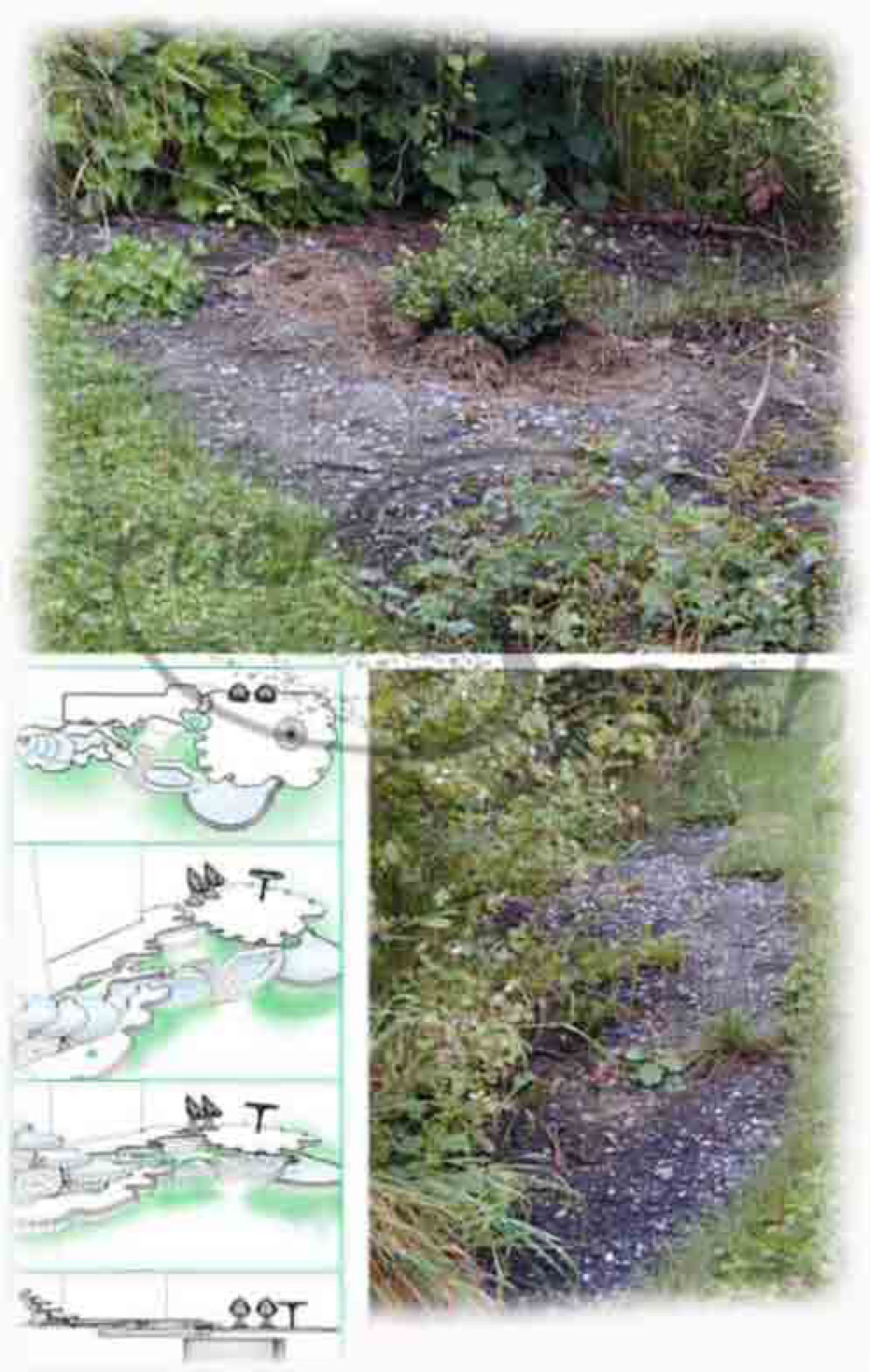
The task of maintaining perennial gardens can overwhelm garden owners. Gardening can be viewed as a health promoting exercise, for a period of years. Such gardens can eventually become neglected by free choices of owners, who later wish to stop maintenance. Gradually care giving efforts are abandoned. The picture above details my design thoughts which demonstrate how certain, purely rock garden effects can simplify weeding. Grassy weeds can more effortlessly be restrained from beds with large shrubs and ground covers. For example, violets can more automatically gain dominance, all without any human maintenance at all. Light lawn mowing can be simplified in a wet ("grass-stimulating") northern climate. "Outcrops" of ledge or stone can be created with very modest amounts of thin concrete, which can last for centuries. The savings of labor combined with the benefit of self maintaining gardens, should in my opinion deserve more study. Design efficiencies deserve comparisons, to see which methods better serve owners, over long periods of time. The schematic diagram and photo taken many years after concrete mulch was poured, show two different gardens. Through the decades, very few buyers were found for raw prototypal ideas. However, thanks toafriend, i was hired to build a large ""turtel garden". The job happily included some land sculpting as well. (Shaping of land contours).
Snapping turtle growing bed sculpture in Ithaca, NY State.(First above is from 2005, before planting). This is my biggest, completed concrete sculpture measuring 60ft or 20 meters in length. The local kids named her Gaia. Part of the intent is to see if kids having fun can at the same learn to nurture plants in a public city park. Getting a great selection of perennial plants to grow anywhere is a challenge. Over the years I have helped work with perennials and highly admire this children's program.
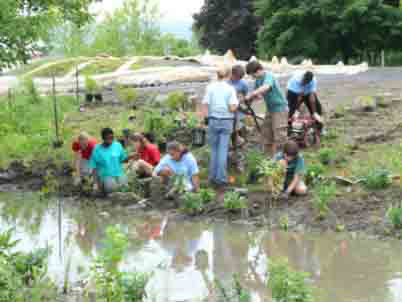
Turtle is visible in the background, (photo above, as seen in 2007). I would almost expect it would take students and adults of all ages, a lot of effort to grow out this wonderful garden. It includes a large wet land and also some large annual vegetable beds near to Gaia. More power to them! This sort of activity seems so much more beneficial to society than excessive athletic sports, (in my personal opinion).
Learning activities are offered for all ages. Exposing city youth to gardening and involving kids in some of the planting work, allows kids and a public park to grow up together. A community which initiates garden projects and develops them fully, has to be among the wisest on earth, (in my opinion).
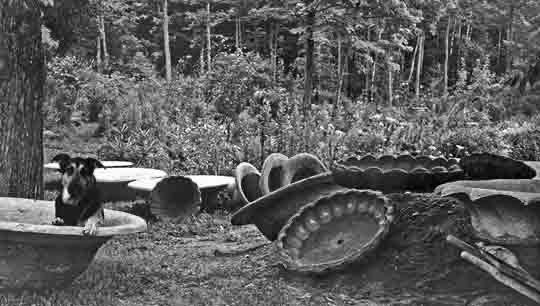
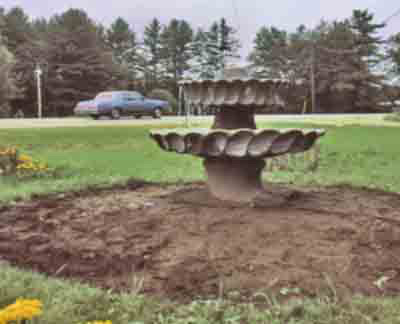
1980s effort to sell planters from a rural homestead location. This began after my wife’s perennial flower sale business was started in the late 1970s, (which also was a very rare kind of sales effort). Annual flower sales were typical near towns but only after the big box stores arrived could perennial marketing become popular with the massive assets of box stores.
I was raised as an American child in Rome, Italy, (and therefore learned a great deal about cultural evolution). My English ancestor who immigrated to the USA, 6 generations ago, was a stone mason, (and generations between included many builders).

